

Your dentist has recommended a CBCT before an implant, a wisdom tooth removal or a difficult root canal, and you want to know two things: is it really necessary, and what will it cost in Mumbai? This guide explains what the scan shows, when it is useful, how its radiation compares with a panoramic X-ray, the approximate charges, and how to prepare.
What a CBCT is
CBCT stands for cone-beam computed tomography. The machine rotates once around your head, sending out a cone-shaped X-ray beam and capturing a series of images that software reconstructs into a three-dimensional model of your jaws, teeth, sinuses and nerve canals.
An intraoral X-ray or an OPG (orthopantomogram, the panoramic film that shows all your teeth on one strip) is a flat, two-dimensional picture. Structures overlap, and it cannot tell the dentist how thick the bone is from cheek to tongue, or exactly how close a root sits to the nerve. A CBCT shows slices in every plane, with measurements accurate to a fraction of a millimetre.
Dental CBCT units also differ from a hospital CT scanner: the field of view is smaller, the scan takes 10-40 seconds, and the radiation dose is considerably lower.
When dentists advise it
A CBCT is not needed for a routine check-up or a simple filling. Dentists usually recommend it for:
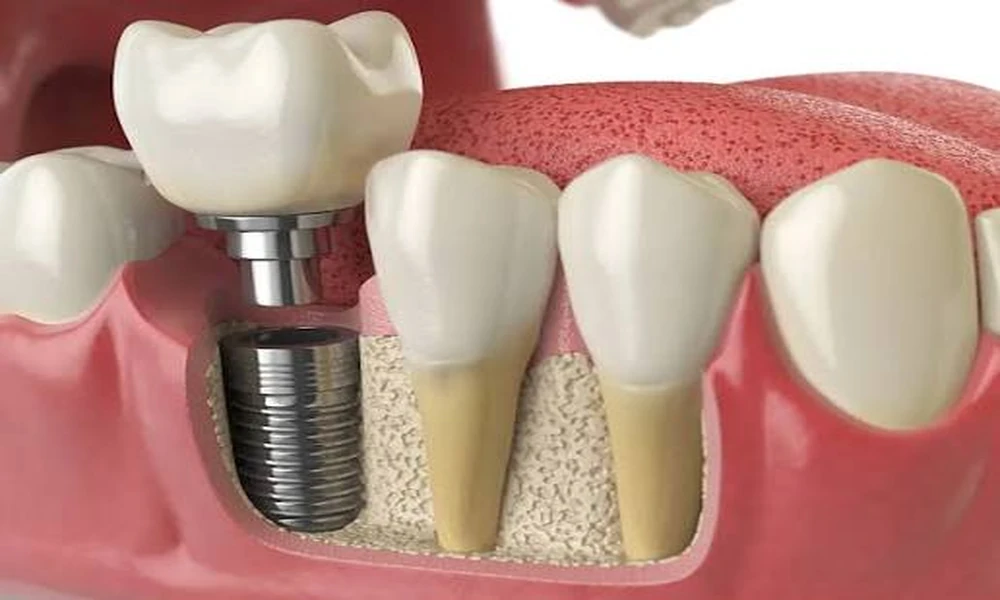
- Implant planning: to measure bone height and width, locate the nerve canal in the lower jaw and the sinus floor in the upper jaw, and decide whether grafting is required. Many surgeons consider it standard before placement and some use it to design a surgical guide; the role of imaging in implant planning is explained further on specialist clinic sites.
- Impacted wisdom teeth: when the OPG suggests the roots are close to or wrapped around the nerve canal, a 3D view reduces the risk of nerve injury during extraction.
- Complex root canals: to find extra canals, cracks, curved roots or a lesion at the root tip not visible on a flat X-ray, especially before re-treating a failed root canal.
- Orthodontic assessment: for impacted canines, unerupted teeth or jaw surgery planning.
- TMJ disorders: to look at the joint surfaces when jaw pain or clicking does not respond to simple treatment.
- Trauma, cysts and tumours: to define the size and borders of a lesion before surgery.
If a scan is suggested for a reason not on this list, it is reasonable to ask what decision the scan will change.
Radiation: CBCT vs OPG
The dose depends on the machine, the field of view and the exposure settings. Approximate effective doses are:
| Imaging type | Approximate effective dose |
|---|---|
| Single intraoral X-ray | 1 – 8 microsieverts |
| OPG (panoramic) | 10 – 25 microsieverts |
| Small-field CBCT (a few teeth) | 20 – 100 microsieverts |
| Large-field CBCT (both jaws) | 70 – 300 microsieverts |
| Medical CT of the head | 1,000 – 2,000 microsieverts |
For comparison, natural background radiation in India is roughly 2,000-3,000 microsieverts a year, so a small-field CBCT is similar to a week or two of background exposure. The scan is still used only when justified, with the smallest field of view that answers the clinical question. Pregnant women should inform the clinic so the scan can be postponed unless urgent.
Indicative charges in Mumbai
The cbct scan cost in mumbai depends on the field of view, whether the scan is done at a dental clinic or a standalone imaging centre, and whether a radiologist’s report is included. The figures below are approximate and vary between centres; confirm the exact fee before booking.
- Small field of view (one quadrant or a few teeth): roughly INR 1,500 – 3,500
- Single jaw: roughly INR 2,500 – 5,000
- Both jaws / full dental arches: roughly INR 3,500 – 7,000
- Extended field including sinuses or TMJ, both sides: roughly INR 5,000 – 10,000
- Additional radiologist report or surgical-guide planning: INR 500 – 3,000 extra at some centres
Some clinics bundle the scan into the implant package, so ask whether a quoted implant fee already includes it. A clinic with its own machine, such as Opus Dental Specialities in Fort and Bandra, can usually scan and review the images in the same visit. Dental imaging is generally not covered by Indian health insurance unless it is part of an admitted surgical procedure, so expect to pay out of pocket.
How to prepare
- Bring previous X-rays or reports so the dentist can compare and avoid a repeat scan.
- Remove metal: earrings, nose pins, glasses, hairpins, hearing aids and removable dentures create artefacts on the images.
- Tell the staff if you are pregnant or think you might be.
- Stand or sit still with your chin on the rest and bite on the guide as instructed. Movement blurs the scan and may require a repeat.
- Ask for a copy of the scan on a USB drive or cloud link; a second dentist or surgeon may want to see it.
There is no fasting, injection or contrast dye involved, and you can go back to work immediately afterwards.
What happens after the scan
The dentist will review the slices with you on screen, pointing out bone volume, nerve position or the root problem that prompted the scan. If you are planning an implant, the dental CBCT scan data is used to decide fixture size, angle and whether grafting is needed. For wisdom teeth, the surgeon will explain the nerve relationship and any precautions.
Knowing the approximate cbct scan cost in mumbai and why the scan was advised lets you weigh a small expense against the much larger cost of a poorly planned implant or an avoidable surgical complication.
Disclaimer: This article is for general information only and is not a substitute for medical advice. Please consult a qualified dentist about whether a CBCT is appropriate for your case.
