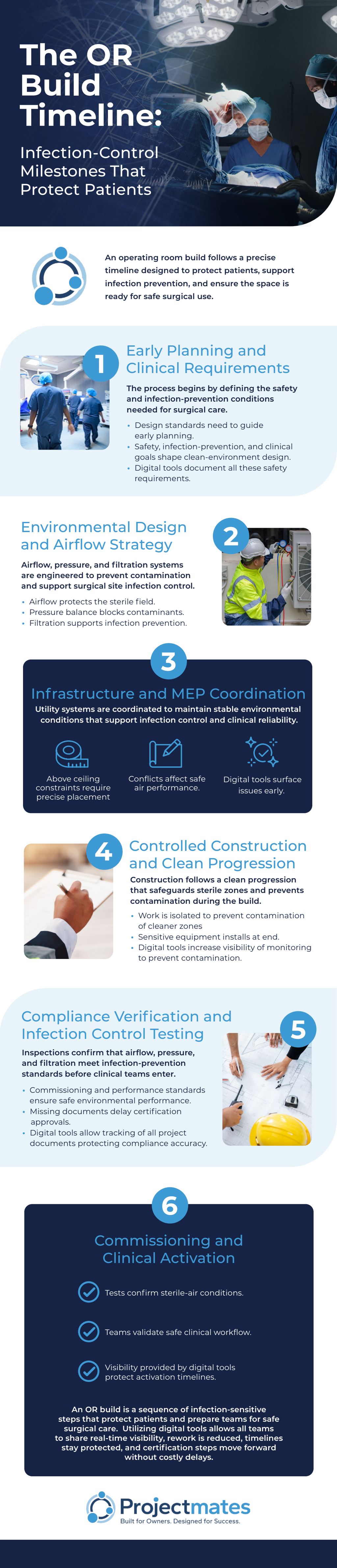
Constructing an operating room requires careful coordination between healthcare leaders, architects, engineers, contractors, and clinical staff. Every stage must meet strict safety, infection control, and regulatory standards before the space can be used for patient care. Following a structured timeline helps reduce delays, control costs, and prepare the facility for safe surgical procedures.
Planning and Design
The project begins with identifying clinical needs. Hospital leaders determine the types of surgeries the operating room will support, expected patient volume, equipment requirements, and staffing needs.
Architects and engineers then develop detailed plans that include room layout, ventilation systems, medical gas lines, electrical infrastructure, lighting, and sterile storage areas. The design must support efficient workflows while maintaining patient and staff safety.
Construction and Equipment Installation
After permits are approved, construction begins. Teams install structural components, plumbing, electrical systems, heating and cooling equipment, and specialized surgical infrastructure.
As the room takes shape, surgical lights, operating tables, medical gas outlets, imaging equipment, and communication systems are installed. Many project teams rely on construction project management scheduling software to coordinate contractors, monitor timelines, and track progress throughout the build.
Testing and Staff Preparation
Construction is followed by a thorough testing process. Air pressure systems, ventilation, electrical equipment, medical gases, alarms, and emergency power supplies are inspected to verify proper operation.
Clinical staff also receive training on room layout, equipment operation, and emergency procedures before the operating room begins serving patients. Trial runs help identify workflow adjustments that improve efficiency and safety.
Building an operating room involves far more than construction alone. Planning, engineering, installation, testing, and staff preparation all contribute to creating a safe surgical environment. A well-managed timeline helps healthcare organizations open new operating rooms with confidence while supporting high standards of patient care from the very first procedure. Check out the infographic below for more information.